For many growing Small and Medium Businesses (SMBs), there comes a “tipping point.” One day, you are a lean team of three or four people moving at lightning speed; the next, you are a team of fifteen, and suddenly, tasks are slipping through the cracks. The natural instinct for many leaders at this stage is to tighten the reins—to increase oversight, attend every meeting, and sign off on every line of code or marketing copy.
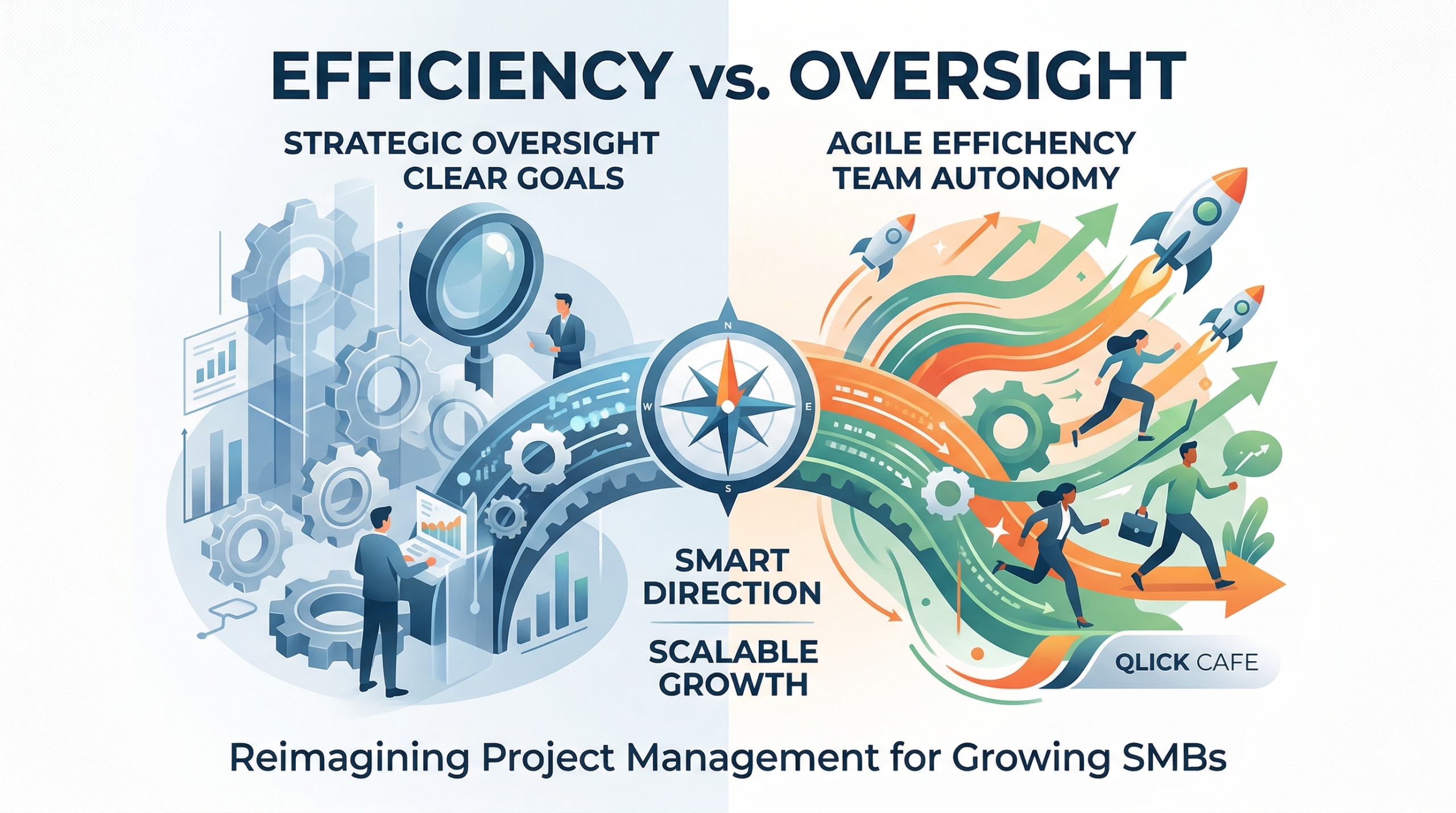
However, there is a fine line between necessary oversight and micromanagement. When a leader crosses that line, the very efficiency that fueled the company’s early growth begins to evaporate.
The Friction of Over-Management
In a project management context, excessive oversight creates a “tax” on productivity. When team members feel they are being watched at a granular level, several things happen:
- Decision Paralysis: Employees stop making independent decisions to avoid the risk of being “wrong” in the eyes of the manager. This creates a massive bottleneck where the manager becomes the single point of failure for every task.
- Innovation Decay: Creativity requires room to breathe. If the process is too rigid, developers and designers will stick to the safest, most boring path just to satisfy the oversight requirements, rather than seeking the most efficient or innovative solution.
- High Turnover: Top-tier talent values autonomy. If a senior specialist feels their professional judgment isn’t trusted, they will eventually look for a culture that respects their expertise.
Reimagining the Balance
To scale an SMB successfully, project management must shift from controlling the process to defining the outcome. Here is how to reimagine that balance:
1. Define “Done” with Precision Oversight shouldn’t happen during the work; it should happen during the planning and the review. By establishing clear Acceptance Criteria and a solid Definition of Done (DoD), you give your team a target. If the final result meets those predefined standards, the specific steps they took to get there are less important.
2. Leverage “Self-Service” Transparency Instead of calling a meeting for a status update, use project management tools to create visibility. When a dashboard shows real-time progress on a Kanban board or a Gantt chart, the leader gets the oversight they need without interrupting the team’s “flow state.”
3. Move to Exception-Based Management Trust your team to handle the “green” days. Focus your oversight on the “red” flags. Set thresholds where your intervention is required—such as a budget overrun of 10% or a milestone delay of more than two days. This allows you to manage by exception rather than by constant presence.
The Bottom Line
For an SMB, efficiency is a competitive advantage. It allows you to outmaneuver larger, slower corporations. By choosing strategic oversight over constant interference, you empower your team to work faster and smarter.
Growth isn’t about doing more work yourself; it’s about building a system where the work gets done better without you. Reimagining your project management style today is the best way to ensure your business is ready for the challenges of tomorrow.